Showing posts with label Life Evolution. Show all posts

Friday, April 26, 2013

New Spin On Origins of Evolvability: Competition to Survive Not Necessary?

Scientists have long observed that species seem to have become increasingly capable of evolving in response to changes in the environment. But computer science researchers now say that the popular explanation of competition to survive in nature may not actually be necessary for evolvability to increase.   In a paper published this week inPLOS ONE, the researchers report that evolvability can increase over generations regardless of whether species are competing for food, habitat or other factors.  Using a simulated model they designed to mimic how organisms evolve, the researchers saw increasing evolvability even without competitive pressure.
Science Direct - Apr. 26, 2013

Joel Lehman, Kenneth O. Stanley.
Evolvability Is Inevitable: Increasing Evolvability without the Pressure to Adapt. 
PLoS ONE, 2013; 8 (4): e62186 DOI: 10.1371/journal.pone.0062186

Friday, April 12, 2013

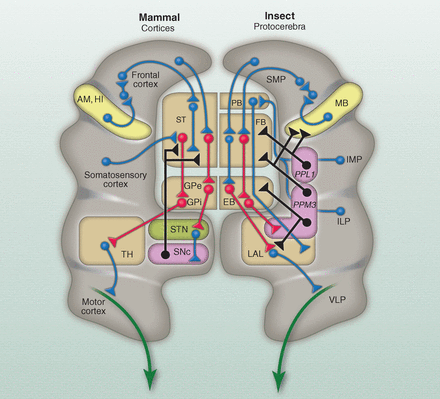
Deep Homology of Arthropod Central Complex and Vertebrate Basal Ganglia

Similarities of brain structure, function, and behavior are usually ascribed to convergent evolution. In their review, Strausfeld and Hirth (p. 157) identify multiple commonalities shared by vertebrate basal ganglia and a system of forebrain centers in arthropods called the central complex. The authors conclude that circuits essential to behavioral choice originated very early across phyla.

Nicholas J. Strausfeld, et al
Science 12 April 2013:
Vol. 340 no. 6129 pp. 157-161 , DOI: 10.1126/science.1231828

Friday, January 18, 2013

The evolutionary causes and consequences of sex-biased gene expression

Females and males often differ extensively in their physical traits. This sexual dimorphism is largely caused by differences in gene expression. Recent advances in genomics, such as RNA sequencing (RNA-seq), have revealed the nature and extent of sex-biased gene expression in diverse species. Here the authors highlight new findings regarding the causes of sex-biased expression, including sexual antagonism and incomplete dosage compensation. they also discuss how sex-biased expression can accelerate the evolution of sex-linked genes.

RNA interference in the nucleus: roles for small RNAs in transcription, epigenetics and beyond

A growing number of functions are emerging for RNA interference (RNAi) in the nucleus, in addition to well-characterized roles in post-transcriptional gene silencing in the cytoplasm. Epigenetic modifications directed by small RNAs have been shown to cause transcriptional repression in plants, fungi and animals. Additionally, increasing evidence indicates that RNAi regulates transcription through interaction with transcriptional machinery. Nuclear small RNAs include small interfering RNAs (siRNAs) and PIWI-interacting RNAs (piRNAs) and are implicated in nuclear processes such as transposon regulation, heterochromatin formation, developmental gene regulation and genome stability.

Stephane E. Castel
Nature Reviews Genetics 14, 100-112 (February 2013) |doi:10.1038/nrg3355

Y-chromosome evolution: emerging insights into processes of Y-chromosome degeneration

The human Y chromosome is intriguing not only because it harbours the master-switch gene that determines gender but also because of its unusual evolutionary history. The Y chromosome evolved from an autosome, and its evolution has been characterized by massive gene decay. Recent whole-genome and transcriptome analyses of Y chromosomes in humans and other primates, in Drosophila species and in plants have shed light on the current gene content of the Y chromosome, its origins and its long-term fate. Furthermore, comparative analysis of young and old Y chromosomes has given further insights into the evolutionary and molecular forces triggering Y-chromosome degeneration and into the evolutionary destiny of the Y chromosome.

Doris Bachtrog
Nature Reviews Genetics 14, 113-124 (February 2013) | doi:10.1038/nrg3366

Thursday, January 17, 2013

Human brain evolution: transcripts, metabolites and their regulators

What evolutionary events led to the emergence of human cognition? Although the genetic differences separating modern humans from both non-human primates (for example, chimpanzees) and archaic hominins (Neanderthals and Denisovans) are known, linking human-specific mutations to the cognitive phenotype remains a challenge.  The new strategy is to focus on human-specific changes at the level of intermediate phenotypes, such as gene expression and metabolism, in conjunction with evolutionary changes in gene regulation involving transcription factors, microRNA and proximal regulatory elements. In this Review the authors show how this strategy has yielded some of the first hints about the mechanisms of human cognition.


Discrete genetic modules are responsible for complex burrow evolution in Peromyscus mice

The genetics of behavioural differences between closely related species are less well understood than the genetics of morphological differences. Many animals build elaborate structures — such as hives, nests and burrows — that 'evolve' as natural selection acts on the behaviour of their builders. This study uses an example of this phenomenon to tackle the question of whether complex behaviours evolve through one or few genetic changes that each influence many aspects of behaviour, or by accumulation of several genetic changes that generate behavioural complexity only when combined. Hopi Hoekstra and colleagues show that the complex burrows created by oldfield mice are governed by several genetic modules, each controlling an aspect of burrow size or shape. This modularity in burrow architecture suggests that complex behaviour may result from the combination of genetically determined behaviours that have accumulated over time.

Jesse N. Weber, et al.

Why Wolves Are Forever Wild, but Dogs Can Be Tamed

Dogs and wolves are genetically so similar, it's been difficult for biologists to understand why wolves remain fiercely wild, while dogs can gladly become "man's best friend." Now, doctoral research by evolutionary biologist Kathryn Lord at the University of Massachusetts Amherst suggests the different behaviors are related to the animals' earliest sensory experiences and the critical period of socialization. Details appear in the current issue of Ethology.

When the socialization window is open, wolf and dog pups begin walking and exploring without fear and will retain familiarity throughout their lives with those things they contact. Domestic dogs can be introduced to humans, horses and even cats at this stage and be comfortable with them forever. But as the period progresses, fear increases and after the window closes, new sights, sounds and smells will elicit a fear response.  Through observations, Lord confirmed that both wolf pups and dogs develop the sense of smell at age two weeks, hearing at four weeks and vision by age six weeks on average. However, these two subspecies enter the critical period of socialization at different ages. Dogs begin the period at four weeks, while wolves begin at two weeks. Therefore, how each subspecies experiences the world during that all-important month is extremely different, and likely leads to different developmental paths, she says.
Science Daily, Jan. 17, 2013

Kathryn Lord.
A Comparison of the Sensory Development of Wolves (Canis lupus lupus) and Dogs (Canis lupus familiaris). 
Ethology, 2013; 119 (2): 110 DOI:10.1111/eth.12044


Friday, January 11, 2013

Multiple Fitness Peaks on the Adaptive Landscape Drive Adaptive Radiation in the Wild

Increased competition is shown to drive multiple peaks in fitness during the adaptive radiation of a species.   The relationship between phenotype and fitness can be visualized as a rugged landscape. Multiple fitness peaks on this landscape are predicted to drive early bursts of niche diversification during adaptive radiation. The authors measured the adaptive landscape in a nascent adaptive radiation of Cyprinodonpupfishes endemic to San Salvador Island, Bahamas, and found multiple coexisting high-fitness regions driven by increased competition at high densities, supporting the early burst model. Hybrids resembling the generalist phenotype were isolated on a local fitness peak separated by a valley from a higher-fitness region corresponding to trophic specialization. This complex landscape could explain both the rarity of specialists across many similar environments due to stabilizing selection on generalists and the rapid morphological diversification rate of specialists due to their higher fitness.

Christopher H. Martin, Peter C. Wainwright
Science 11 January 2013: Vol. 339 no. 6116 pp. 208-211, DOI: 10.1126/science.1227710


Thursday, January 10, 2013

Analysis of 6,515 exomes reveals the recent origin of most human protein-coding variants

Understanding the extent, distribution and age of human protein-coding genetic variants across diverse populations allows fascinating insights into human population dynamics and the resultant evolutionary forces. Cataloguing and dating such variation will also allow us to understand the origin of the seemingly endless list of potential disease variants and to prioritize among them for further investigation. A recent study describes the sequencing of 15,336 genes in 4,298 individuals of European American and 2,217 individuals of African American ancestry, providing insights into a recent human population expansion and the associated evolution of disease variants.

Fu, W. et al

Sunday, January 6, 2013

Dual origins of the mammalian accessory olfactory bulb revealed by an evolutionarily conserved migratory stream

The accessory olfactory bulb (AOB) is a critical olfactory structure that has been implicated in mediating social behavior. It receives input from the vomeronasal organ and projects to targets in the amygdaloid complex. Its anterior and posterior components (aAOB and pAOB) display molecular, connectional and functional segregation in processing reproductive and defensive and aggressive behaviors, respectively. We observed a dichotomy in the development of the projection neurons of the aAOB and pAOB in mice. We found that they had distinct sites of origin and that different regulatory molecules were required for their specification and migration. aAOB neurons arose locally in the rostral telencephalon, similar to main olfactory bulb neurons. In contrast, pAOB neurons arose caudally, from the neuroepithelium of the diencephalic-telencephalic boundary, from which they migrated rostrally to reach their destination. This unusual origin and migration is conserved in Xenopus, providing an insight into the origin of a key component of this system in evolution.

Dhananjay Huilgol, et al.
Nature Neuroscience (2013) doi:10.1038/nn.3297

Friday, December 21, 2012

Retooling spare parts: gene duplication and cognition

Two new studies provide experimental evidence of how ancient genomic duplications of synaptic genes provided the substrate for diversification that ultimately expanded vertebrate cognitive complexity.

T Grant Belgard & Daniel H Geschwind
Nature Neuroscience 16, 6–8 (2013) doi:10.1038/nn.3292
Published online 21 December 2012


Tuesday, December 18, 2012

Evolution: Genomic pacemakers or ticking clocks?

Although different genes evolve at different rates, when complete sets of orthologous genes are considered across taxa, the distribution of rates is remarkably conserved. That is, the differences in the rates of evolution among genes in a genome remain consistent. A potential explanation for this observation is the molecular clock, which is a model that has been used widely in phylogenetics. Now, Koonin and colleagues show that available phylogenetic data are more compatible with an alternative model that they propose termed the universal pacemaker (UPM).
Snir S, Wolf YI, Koonin EV.
PLoS Comput Biol. 
2012 Nov;8(11):e1002785. doi: 10.1371/journal.pcbi.1002785


Wednesday, December 12, 2012

Ediacaran life on land

Fossils found in rocks of the Ediacaran period in Australia have been previously characterized as early marine organisms. But a report suggests that these rocks are fossilized soils. So did some of these Ediacaran organisms in fact live on land, like lichens? A palaeontologist and a geologist weigh up the evidence.
Shuhai Xiao & L. Paul Knauth
Nature 493, 28–29 (03 January 2013) doi:10.1038/nature11765nline 12 December 2012

Tuesday, December 11, 2012

'Obamadon' was wiped out by the asteroid

Asteroid that killed the dinosaurs also wiped out the ‘Obamadon’,
The asteroid collision widely thought to have killed the dinosaurs also led to extreme devastation among snake and lizard species, according to new research — including the extinction of a newly identified lizard Yale and Harvard scientists have named Obamadon gracilis. The published paper can be fund
here.

Monday, December 10, 2012

Evolution of GluN2A/B cytoplasmic domains diversified vertebrate synaptic plasticity and behavior

Understanding the mechanisms underlying the many forms of vertebrate behavior is a central objective of neuroscience and, although studied extensively at the cellular and circuit levels, very little is known about the underlying molecular evolutionary events. How did genome evolution give rise to the many forms of learning, emotional behavior and motor functions and generate the subtlety of synaptic regulation that is manifest in the mammalian brain?

Two genome duplications early in the vertebrate lineage expanded gene families, including GluN2 subunits of the NMDA receptor. Diversification between the four mammalian GluN2 proteins occurred primarily at their intracellular C-terminal domains (CTDs). To identify shared ancestral functions and diversified subunit-specific functions, the authors exchanged the exons encoding the GluN2A (also known as Grin2a) and GluN2B (also known as Grin2b) CTDs in two knock-in mice and analyzed the mice's biochemistry, synaptic physiology, and multiple learned and innate behaviors. The eight behaviors were genetically separated into four groups, including one group comprising three types of learning linked to conserved GluN2A/B regions. In contrast, the remaining five behaviors exhibited subunit-specific regulation. GluN2A/B CTD diversification conferred differential binding to cytoplasmic MAGUK proteins and differential forms of long-term potentiation. These data indicate that vertebrate behavior and synaptic signaling acquired increased complexity from the duplication and diversification of ancestral GluN2 genes.

Wednesday, December 5, 2012

Genomic variation landscape of the human gut microbiome

Whereas large-scale efforts have rapidly advanced the understanding and practical impact of human genomic variation, the practical impact of variation is largely unexplored in the human microbiome. The authors developed a framework for metagenomic variation analysis and applied it to 252 faecal metagenomes of 207 individuals from Europe and North America. Using 7.4 billion reads aligned to 101 reference species, they detected 10.3 million single nucleotide polymorphisms (SNPs), 107,991 short insertions/deletions, and 1,051 structural variants. The average ratio of non-synonymous to synonymous polymorphism rates of 0.11 was more variable between gut microbial species than across human hosts. Subjects sampled at varying time intervals exhibited individuality and temporal stability of SNP variation patterns, despite considerable composition changes of their gut microbiota. This indicates that individual-specific strains are not easily replaced and that an individual might have a unique metagenomic genotype, which may be exploitable for personalized diet or drug intake.

Siegfried Schloissnig et al.
Nature 493, 45–50 (03 January 2013) doi:10.1038/nature11711
Published online 05 December 2012


Sunday, December 2, 2012

Synaptic scaffold evolution generated components of vertebrate cognitive complexity

The origins and evolution of higher cognitive functions, including complex forms of learning, attention and executive functions, are unknown. A potential mechanism driving the evolution of vertebrate cognition early in the vertebrate lineage (550 million years ago) was genome duplication and subsequent diversification of postsynaptic genes. Here the authors report the first genetic analysis of a vertebrate gene family in cognitive functions measured using computerized touchscreens. Comparison of mice carrying mutations in each of the four Dlg paralogs showed that simple associative learning required Dlg4, whereas Dlg2 and Dlg3 diversified to have opposing functions in complex cognitive processes. Exploiting the translational utility of touchscreens in humans and mice, testing Dlg2 mutations in both species showed that Dlg2's role in complex learning, cognitive flexibility and attention has been highly conserved over 100 million years. Dlg-family mutations underlie psychiatric disorders, suggesting that genome evolution expanded the complexity of vertebrate cognition at the cost of susceptibility to mental illness.
Jess Nithianantharajah, et al.
Nature Neuroscience 16, 16–24 (2013) doi:10.1038/nn.3276

Tuesday, November 20, 2012

Evolution of Human Intellect: Human-Specific Regulation of Neuronal Genes

A new study published November 20 in the open-access journal PLOS Biology has identified hundreds of small regions of the genome that appear to be uniquely regulated in human neurons. These regulatory differences distinguish us from other primates, including monkeys and apes, and as neurons are at the core of our unique cognitive abilities, these features may ultimately hold the key to our intellectual prowess (and also to our potential vulnerability to a wide range of 'human-specific' diseases from autism to Alzheimer's).
Hennady P. Shulha, et al.
PLoS Biology, 2012; 10 (11): e1001427 DOI:10.1371/journal.pbio.1001427


Friday, November 16, 2012

Evolution of genetic and genomic features unique to the human lineage

Given the unprecedented tools that are now available for rapidly comparing genomes, the identification and study of genetic and genomic changes that are unique to our species have accelerated, and we are entering a golden age of human evolutionary genomics. Here the authors provide an overview of these efforts, highlighting important recent discoveries, examples of the different types of human-specific genomic and genetic changes identified, and salient trends, such as the localization of evolutionary adaptive changes to complex loci that are highly enriched for disease associations. Finally, they discuss the remaining challenges, such as the incomplete nature of current genome sequence assemblies and difficulties in linking human-specific genomic changes to human-specific phenotypic traits.

Majesta O'Bleness, et al.
Nature Reviews Genetics 13, 853-866 (December 2012) |doi:10.1038/nrg3336